
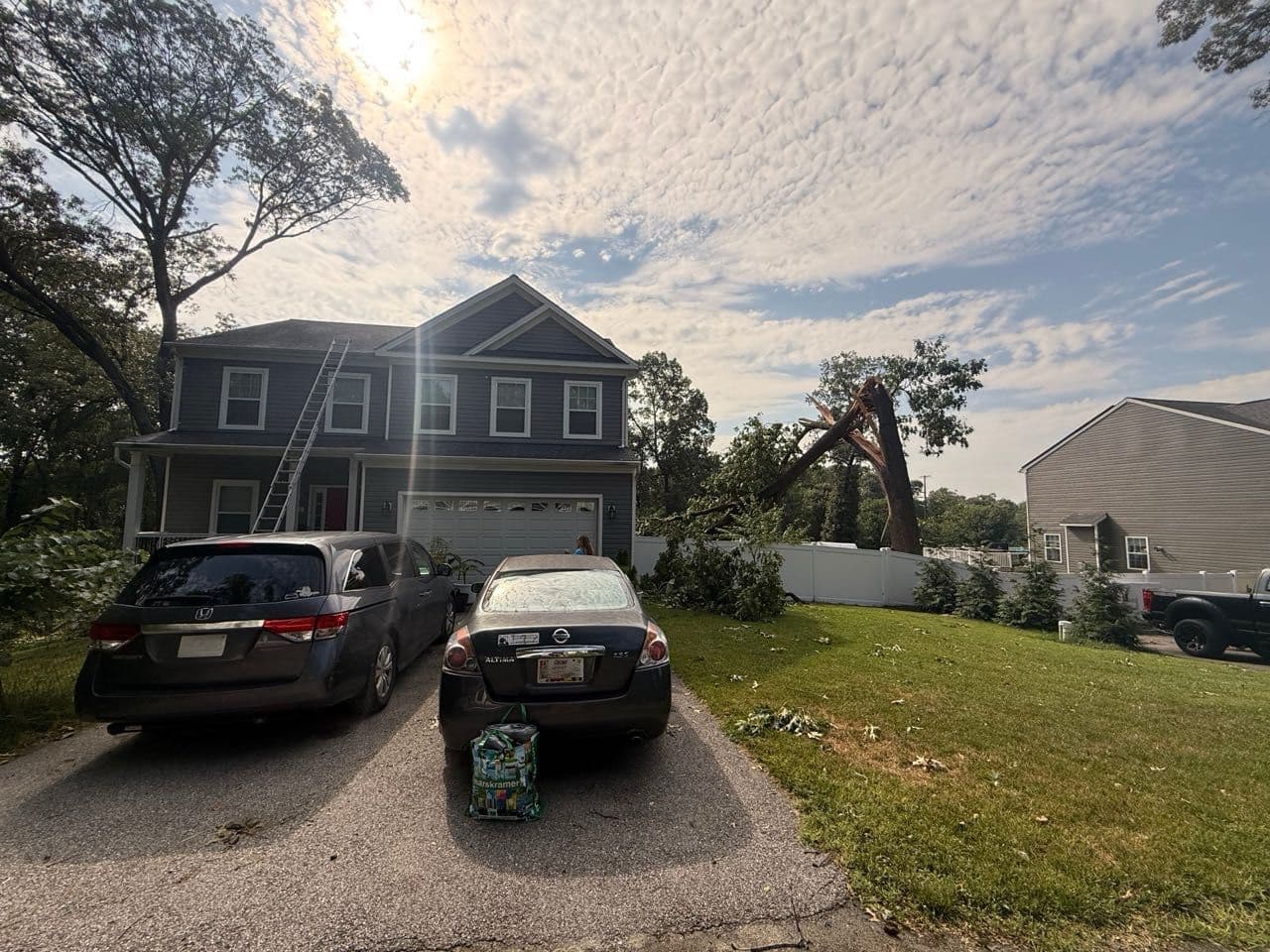
What happened: a real Severn storm, July 2026
Maryland summer storms don't mess around. Straight-line winds and saturated ground are all it takes to bring down a mature tree — and when one lands on a roof, the damage is rarely just "a few shingles." On this Severn job, the trunk split and fell across the back slope of the house, driving a limb through the roof surface and into the decking below.
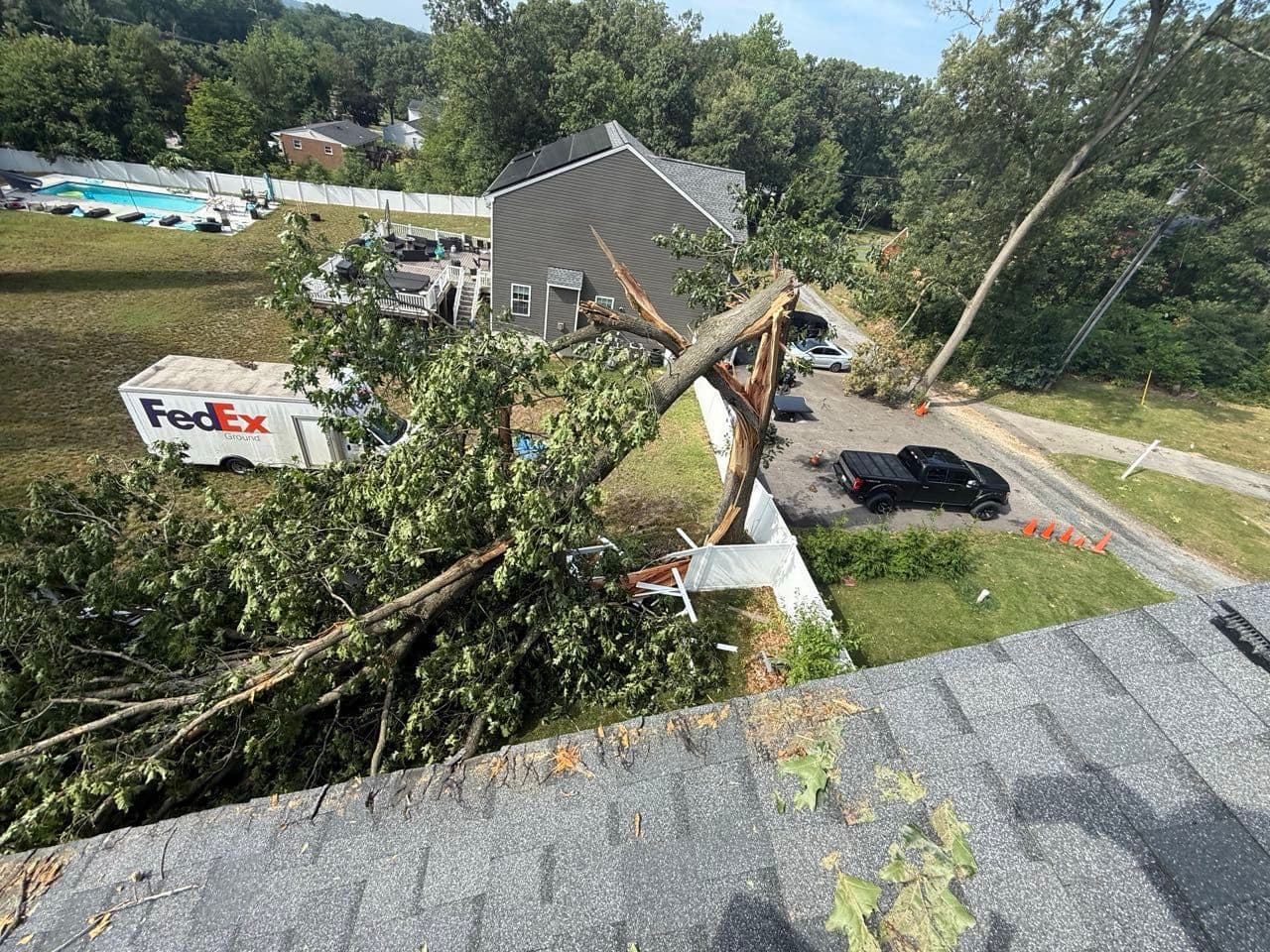
Storm-damage roof repair is one of the highest-searched roofing needs every July in Maryland — because this happens constantly, and homeowners are (understandably) not sure what to do first.
The first hour: what to do (and what NOT to do)
If a tree just hit your roof, work this list in order:
- Get everyone out of the rooms under the impact. A punctured roof means the ceiling below can be compromised. Clear the area.
- Kill power to affected rooms if water is coming in near fixtures or outlets. Water + electricity is the real emergency.
- Do NOT climb onto the roof. Storm-damaged decking is unpredictable, and a wet architectural-shingle slope is a fall risk. This is the single most common way homeowners get hurt after a storm.
- Do NOT let a random door-knocker "tarp it real quick" or sign an AOB (assignment of benefits) on your driveway. Post-storm chasers show up fast in Anne Arundel County; a rushed signature can hand your insurance claim to a stranger.
- Photograph everything from the ground — the tree, the roofline, any interior water — then call a licensed local roofer who can actually respond today.
- Move cars and grills out from under damaged limbs. Loaded branches drop without warning.
That's it. Your job in the first hour is safety and documentation — not the roof itself.
How bad is it, really? Reading the damage
From the ground, a fallen tree looks like a landscaping problem. From the roof, it's a structural one. Here's what the limb did to this roof:
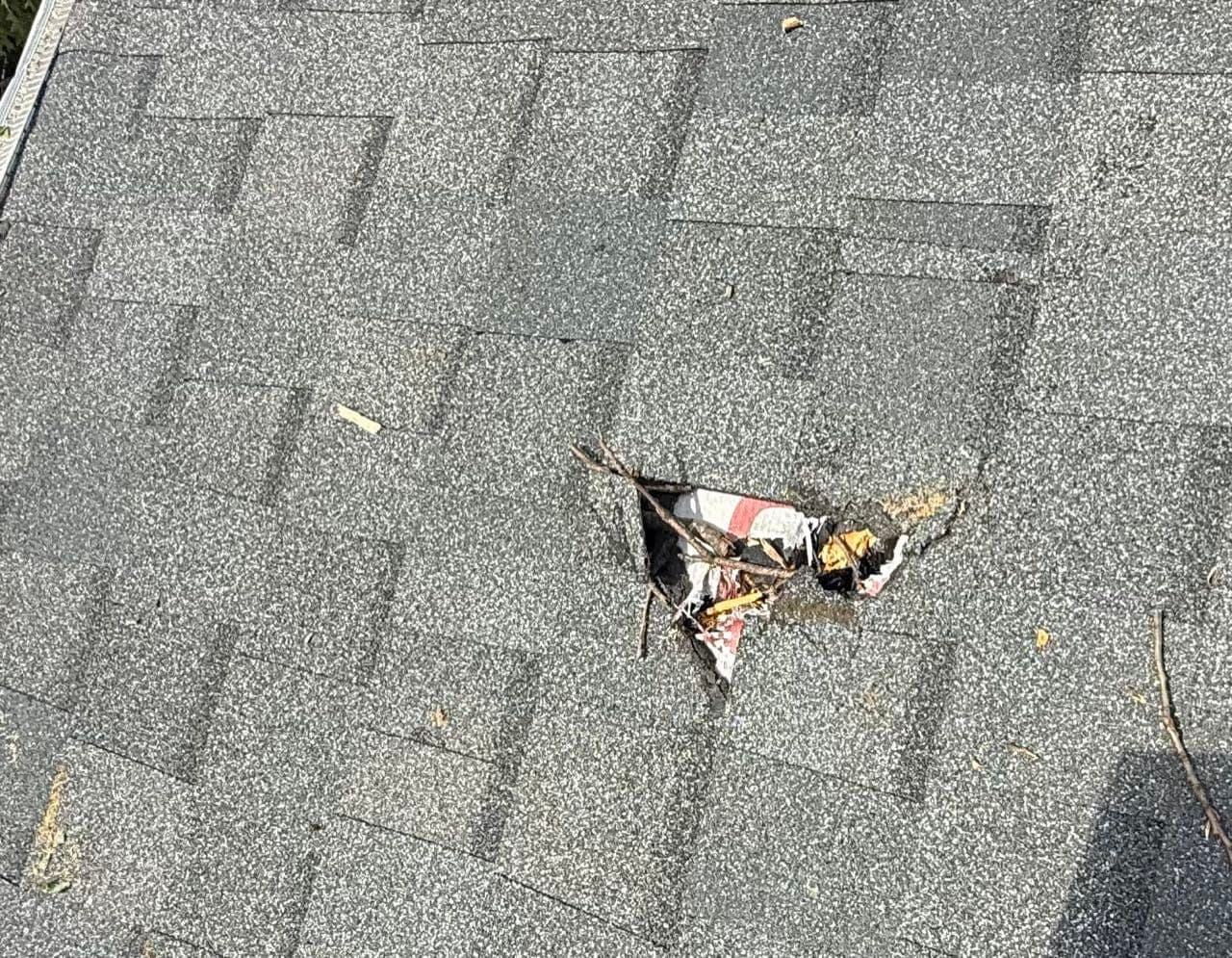
That's not a surface scuff — the impact went through the shingles and the plywood decking underneath, which means the roof is open to weather until it's both sealed and structurally repaired. A tarp alone isn't enough here; the decking has to be replaced so the new shingles have something solid to seal against.
This is exactly why "reading" storm damage matters. Some tree strikes only crack a few shingles. Others, like this one, breach the deck. You can't tell which from the driveway — you need someone on the roof who knows the difference.
Tarp, repair, or replace? How we decide
After a storm inspection, every roof lands in one of three buckets. Here's the framework we use, and roughly what each involves in our area:
| Situation | What it needs | Typical Anne Arundel County range* |
|---|---|---|
| Surface damage, no breach (lifted or cracked shingles) | Shingle repair + seal | $400 – $1,500 |
| Roof is open but decking is intact | Emergency tarp, then shingle repair | $600 – $3,000 |
| Decking breached (this job) | Tarp + decking replacement + shingle repair | $1,500 – $6,000 |
| Widespread structural damage across slopes | Partial or full replacement | $10,000 – $25,000+ |
*Real, typical ranges for our area — not a quote. Your number depends on roof size, pitch, access, and how far the damage spread. We measure and put it in writing after a free inspection.
What we actually did on this roof
Step 1 — Same-day tarp to stop the water. Before anything else, we get the roof watertight so the next rain doesn't finish what the tree started.
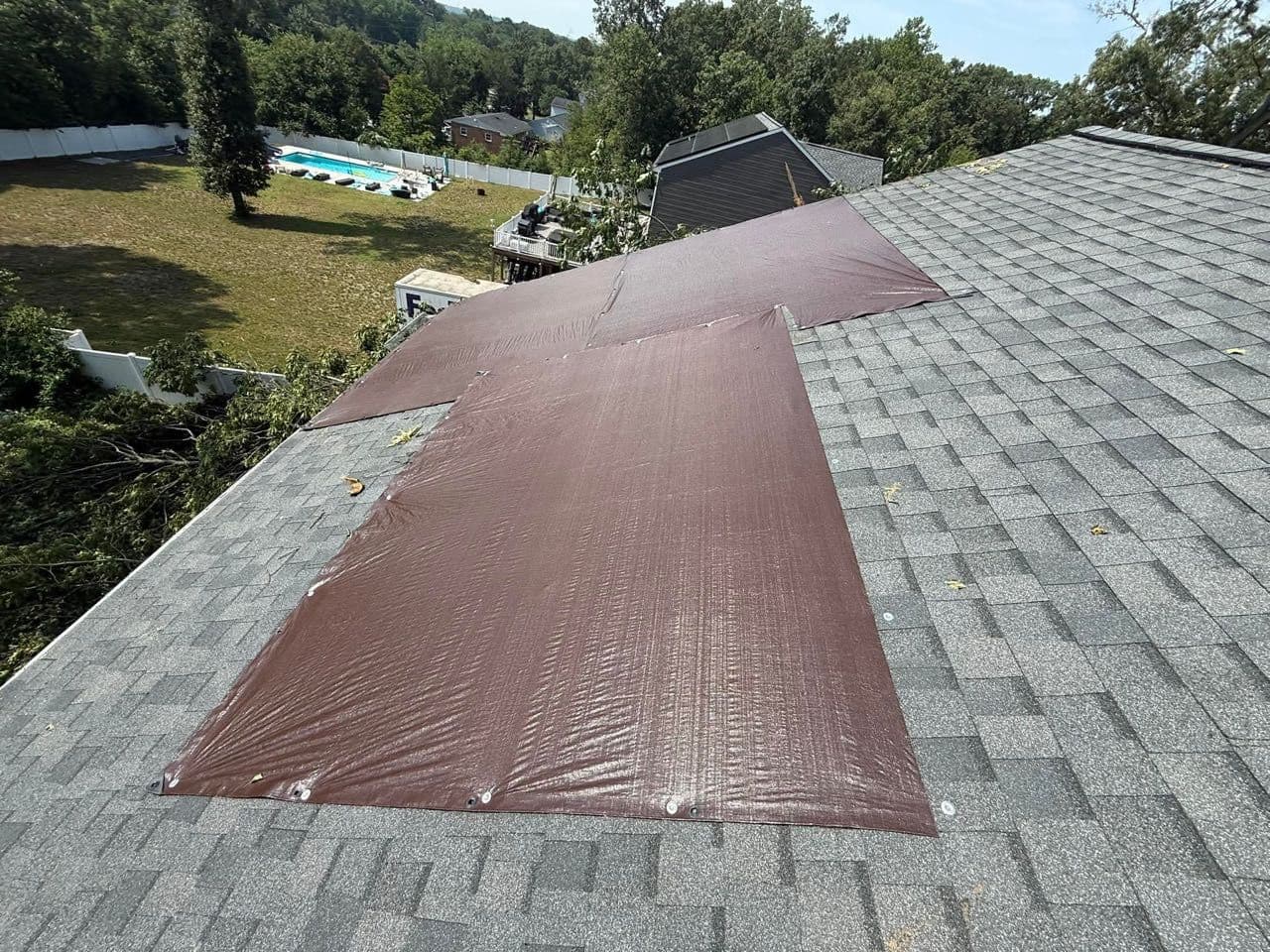
Step 2 — Replace the breached decking. Once the area was safe and dry, we cut out the damaged plywood and installed new decking so the repair has a solid, level base.
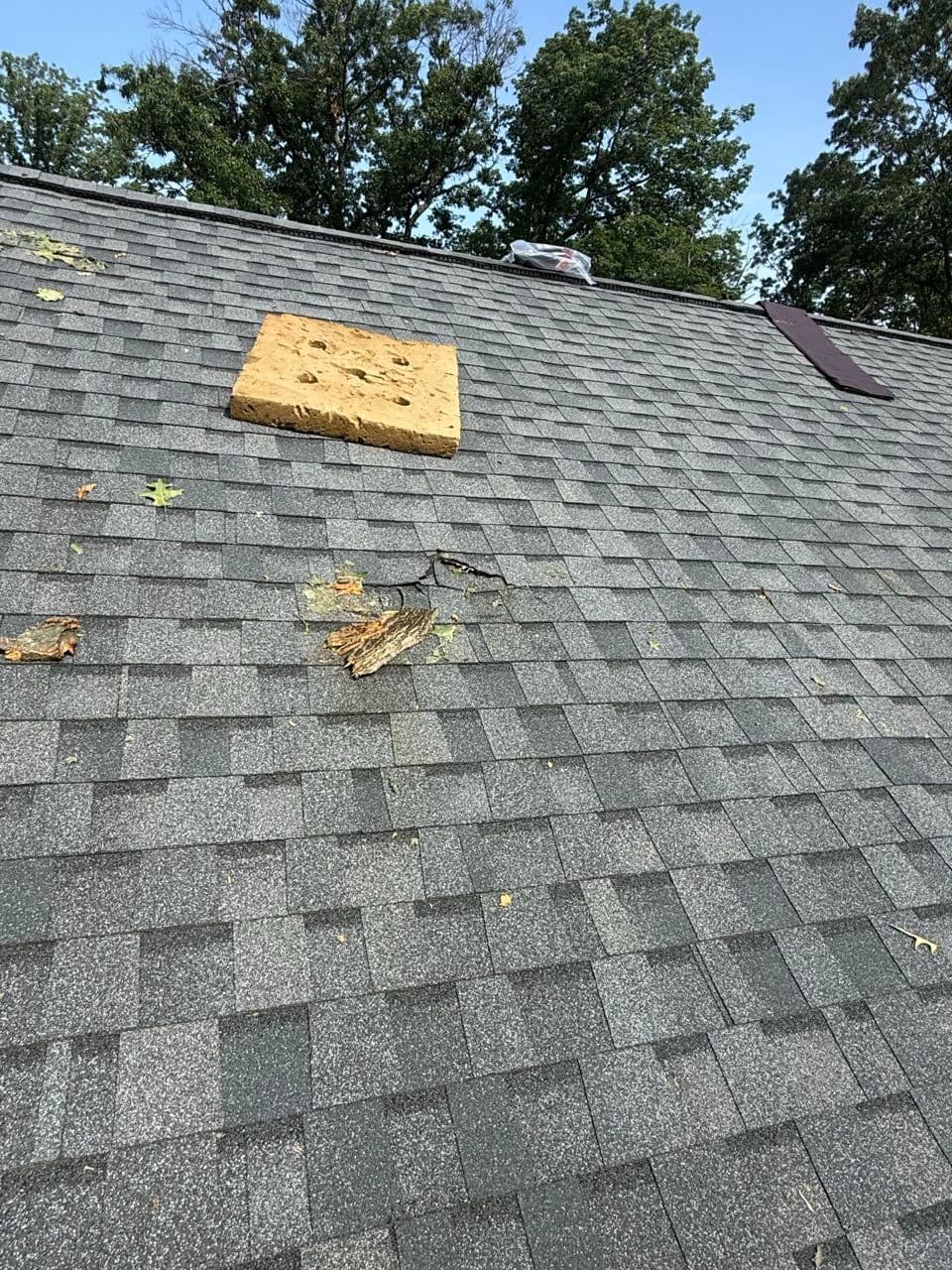
From there it's ice-and-water shield over the repair, matched architectural shingles, and a final inspection. The homeowner went from "there's a hole in my roof" to "it's tarped and the deck is fixed" the same day we arrived.
Does insurance cover a tree falling on your roof?
In most cases, yes — a tree falling on your home from wind or storm is a covered peril under standard Maryland homeowner's policies, including the roof repair and often the tree removal from the structure. A few things that protect your claim:
- Document before cleanup. Photos of the tree on the house, the roof damage, and any interior water are your evidence.
- Let your roofer meet the adjuster. We document the full scope on-site so nothing gets missed or underpaid.
- Never sign an AOB with a storm chaser. You keep control of your own claim.
- Get the roof tarped fast — insurers expect you to prevent further damage, and a same-day tarp shows you did.
We're not your insurance company and every policy differs, so confirm your specifics with your carrier — but tree-on-roof is one of the most commonly covered storm claims we see.
Why local response time is the whole game
After a storm, the roofs that stay dry are the ones that get tarped first. We're based in Severn (21144), so "same day" is realistic for us across Anne Arundel County — not a promise we outsource to a crew two counties away. When a hole is open and rain is in the forecast, hours matter more than anything on the quote.
If you're dealing with storm or tree damage right now: see our emergency roof repair service → or call (410) 508-6141. We also cover Severna Park, Glen Burnie, Odenton, and all of our service areas. For non-emergency roof questions, here's everything we do on roofs in Severn.
FAQ
Can you really come the same day? For active storm damage in Anne Arundel County, usually yes — emergency tarping is our priority call. The full repair is scheduled after the roof is watertight.
Who do I call first — insurance or the roofer? Call a licensed roofer to get the roof tarped and documented, then file your claim. A same-day tarp both stops the damage and strengthens your claim. Don't wait on a claim number while your ceiling gets wet.
How much does emergency roof repair cost in Maryland? Emergency tarping typically runs a few hundred dollars; a tree-impact repair with new decking commonly lands in the $1,500–$6,000 range in our area. Widespread damage can mean partial or full replacement. We quote the exact scope in writing after inspecting.
Do I have to replace the whole roof after a tree hits it? Not usually. If the damage is localized — like this Severn job — we repair the affected section. Full replacement is only for widespread structural damage or an already-aging roof.
Is a tarp enough to leave it until repair? A properly installed tarp will keep you dry for a short window, but a breached deck needs real repair — don't treat a tarp as the finish line.
Get a storm-damage inspection today
If a tree or storm hit your roof, don't wait for the next rain. We'll inspect it, tarp it if it's open, document everything for your insurance, and give you a free written repair estimate. Family-owned, MHIC #05-146983, based in Severn since 2016.
Call (410) 508-6141 now or request emergency roof repair online.